
Working together for you
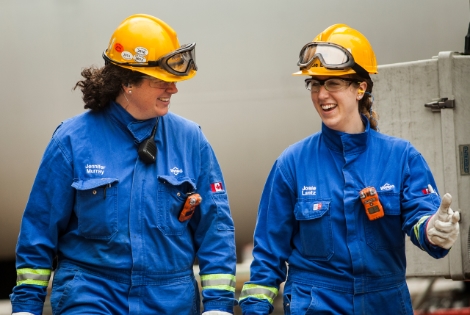
Our commitment to providing reliable, safe supply requires dedication to excellence along every point of our extensive global supply chain. Managing this complex, integrated chain requires excellent timing, coordination and precision.
Team members throughout our company organize and connect every link in the chain, while remaining committed to protecting our environment. This continued improvement in our environmental performance is a direct result of the investments we have made in our facilities.
Reliable supply, diverse network
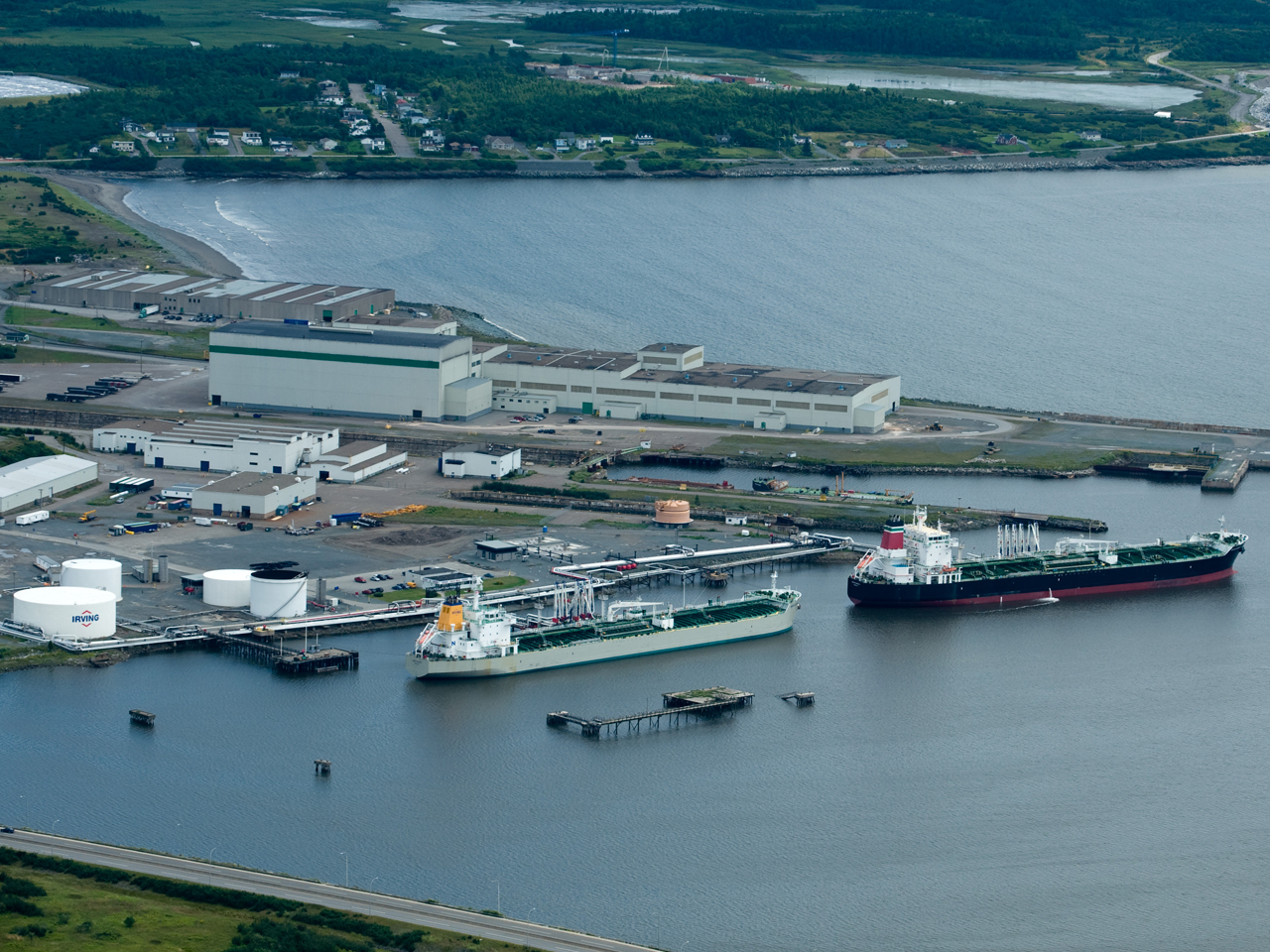
We rely on our strong network of partnerships with a group of diverse, reliable and quality crude oil suppliers from around the world. Most of our crude arrives by ship, which is unloaded at our Irving Canaport Marine Terminal in Saint John, NB.

Irving Canaport was the western hemisphere’s first deep-water crude terminal able to receive supertankers, with more than six million barrels of storage capacity.
Saint John Refinery
- Crude Capacity
- +320,000 barrels/day
- Workforce
- Over 1,600 people
Opened in 1960 on a 780-acre site, our Saint John refinery is Canada’s largest. Each day we produce finished energy products for our wholesale and retail markets, including gasoline, diesel, heating oil, jet fuel, propane and asphalt. More than half of the finished energy product is exported to the Northeast US.
Saint John refinery location
Irving Oil was the first oil company to receive the U.S. Environmental Protection Agency Clean Air Excellence Award for low-sulfur gasoline.
Whitegate Refinery
- Crude Capacity
- Up to 75,000 barrels/day
- Workforce
- Over 200 people
Located in County Cork, Ireland, Whitegate is the country’s only refinery. Whitegate processes light, low-sulphur crude oil, sourced from the North Sea and West Africa. The facility produces transportation and heating fuels such as gasoline, diesel and kerosene that are then distributed across Ireland and Europe.
Since it opened in 1959, Ireland’s only crude oil refinery has played a critical role in the country’s energy infrastructure.
Whitegate refinery location
Supplies about 40 per cent of Ireland’s transport and heating fuel.
Quality products for your business
Our wholesale and industrial fuels business focuses on responsive customer service, providing a reliable supply of quality products and building long-lasting relationships. We serve our business customers in three unique markets:
Text with links grid component
Blending & Packaging
 Content
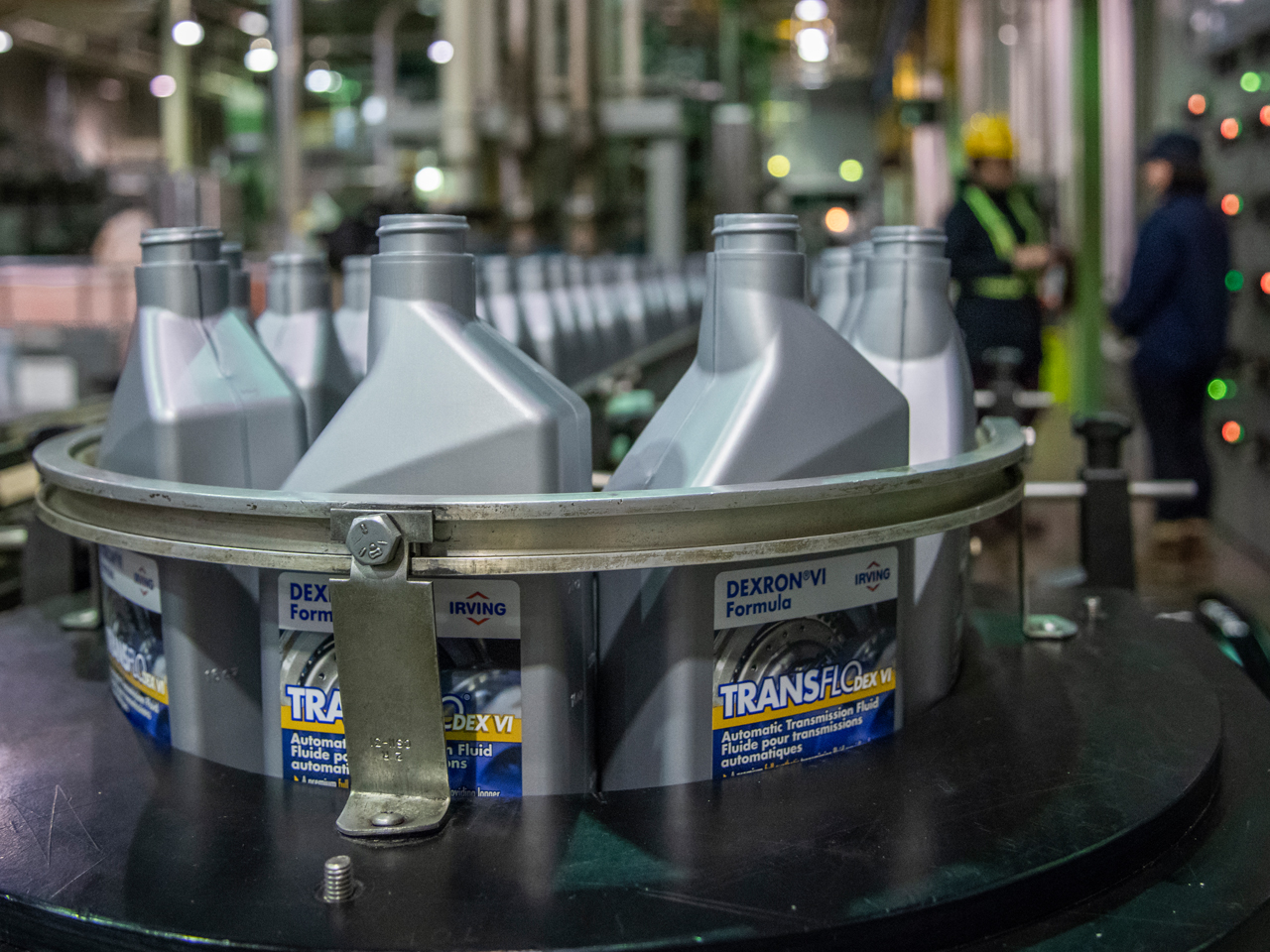
We produce more than 2,700 finished lubricant, chemical and DEF SKUs for distribution around the globe.
LinkWholesale & Specialty Fuels
 Content
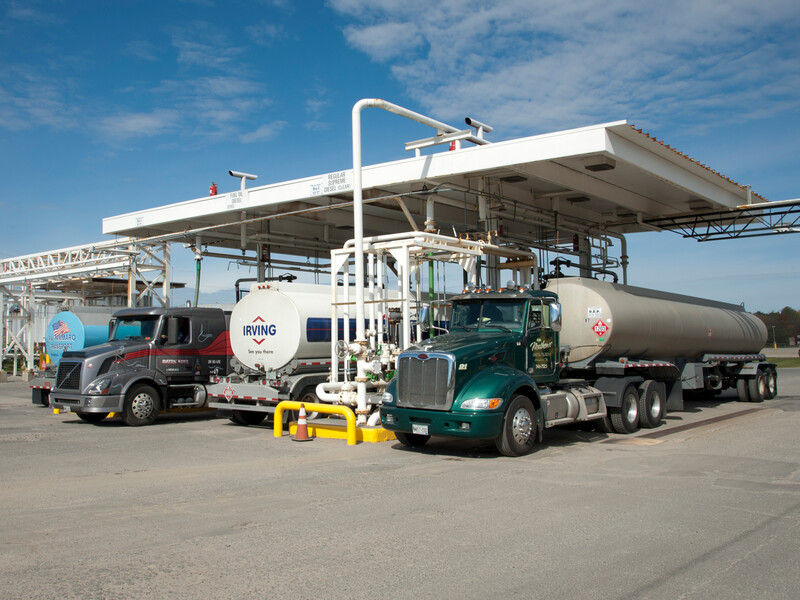
With an extensive network of truck terminals, we provide unbranded wholesale customers with quality grades of gasoline, diesel, kerosene and heating oil.
LinkCargo & Product Trading
 Content
If you are looking for energy products in volumes greater than 200,000 barrels per shipment, our cargo business offers unmatched supply.
Link
Quality products
Text with links grid component
For the road
 Content
With more than 900 fuelling locations and 20 Big Stop locations across Eastern Canada and the northeastern United States, we provide you with clean facilities, friendly service and convenient locations.
LinkFor your home
 Content
Our team of home heating experts offer fuel delivery, a complete line of energy-efficient home heating equipment, and installation and maintenance services by our local Irving Energy team.
Link